The Gut-Brain Axis: Why Your "Second Brain" Controls Your Mood
Ever wonder why "gut feelings" are so intense? It’s because your digestive system is actually your "second brain." In this deep dive, we explore the Vagus Nerve—the high-speed data cable connecting your mind to your microbiome. Discover how 95% of your serotonin is made in your gut and why the secret to beating brain fog and anxiety might actually start on your dinner plate with probiotics and prebiotics.
Adrienne Muhammad
3/17/20263 min read
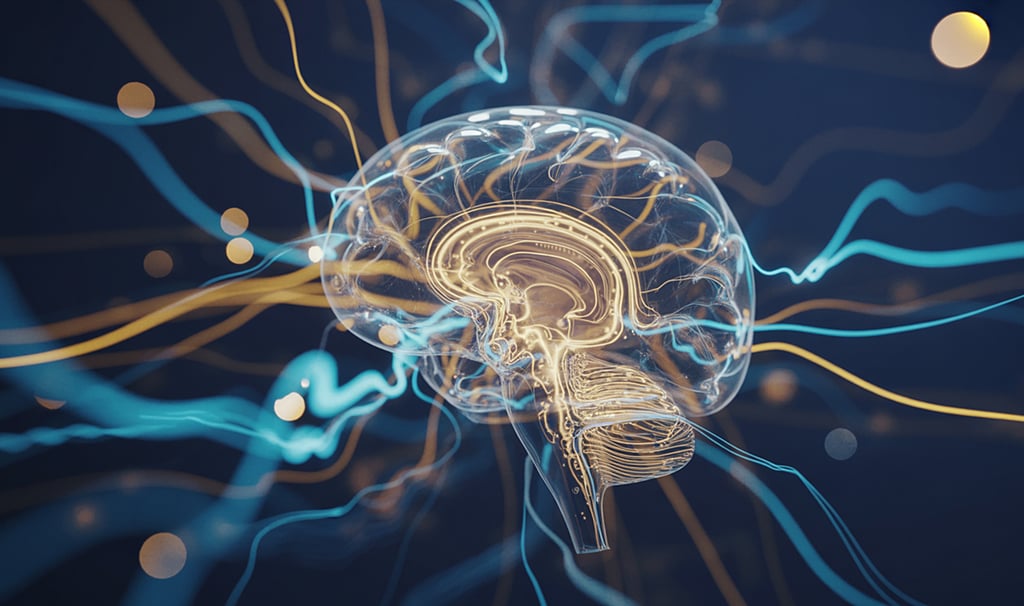
The Gut-Brain Axis: Why Your "Second Brain" Controls Your Mood
If you’ve ever felt "butterflies" in your stomach before a big presentation or had a "gut feeling" about a shady situation, you weren’t just being poetic. You were experiencing the gut-brain axis in real-time. This isn’t just about digestion; it’s a two-way, high-speed fiber optic cable (known as the Vagus Nerve) that connects your emotional centers to your GI tract.
The Enteric Nervous System: Your Body's Backup Drive
Hidden in the walls of your digestive system is the Enteric Nervous System (ENS). It’s so complex that scientists literally call it your "second brain." While it doesn’t help you solve calculus, it does something even more impressive: it produces about 95% of your body's serotonin and 50% of your dopamine.
When your gut is inflamed or the "bad" bacteria take over, your production of these "feel-good" neurotransmitters tanks. This is why researchers are finding such a massive link between gut health and things like anxiety and depression. If your gut is unhappy, your brain is going to hear about it—loud and clear.
The Microbiome: The Real Culinary Masters
Inside you is a massive colony of trillions of bacteria called the microbiome. These little guys aren't just hitching a ride; they are active participants in your biology. They break down the fibers your body can't digest and turn them into Short-Chain Fatty Acids (SCFAs) like butyrate, which actually help protect the blood-brain barrier.
Historically, before the era of ultra-processed "franken-foods," our ancestors ate a diet loaded with fermented foods(probiotics) and diverse plant fibers (prebiotics). These foods acted as "fertilizer" for a diverse microbiome. Today, our sterile, high-sugar diets have turned that diverse forest into a desert, leading to what we call "Leaky Gut"—where toxins slip through the intestinal lining and cause systemic inflammation that eventually reaches the brain.
How to Feed the Connection
To keep the communication lines open and your mood stable, you have to feed the workers.
Probiotics: Think fermented. Kimchi, sauerkraut, and high-quality yogurt (no added sugar!) are like sending in reinforcements for your bacterial army.
Prebiotics: This is the food for your bacteria. Garlic, onions, and asparagus are high in the fibers that your gut "geniuses" love to snack on.
Polyphenols: Dark chocolate and berries (which we already have on our shopping list!) are amazing for reducing gut inflammation.
The Bottom Line
We used to think the brain was the undisputed CEO of the body, but it turns out it’s more of a partnership. By taking care of your gut, you aren't just avoiding a stomach ache—you’re protecting your mental clarity and emotional resilience for the long haul.
FAQ: The Gut-Brain Axis
Q: Can a bad diet actually cause "brain fog" through the gut-brain axis? A: Absolutely. When you eat a lot of ultra-processed foods or high sugar, it causes dysbiosis—an imbalance where "bad" bacteria outnumber the good ones. These bad actors release toxins that can leak through your intestinal lining (often called Leaky Gut). Once those toxins hit your bloodstream, they trigger systemic inflammation that crosses the blood-brain barrier. This "brain on fire" feeling is what we experience as brain fog, sluggishness, and even irritability.
Q: Is the Vagus Nerve a one-way street from the brain to the stomach? A: This is a common myth! While your brain does send signals down to your gut (like when you feel "butterflies" from stress), about 80% to 90% of the fibers in the Vagus Nerve actually send information up from the gut to the brain. This means your gut is constantly reporting on your nutrient levels, bacterial balance, and inflammation. In many ways, your "second brain" is actually the one giving the orders to your "main" brain.
Adrienne Muhammad, CFNC