The Fasting Brain: How Intermittent Fasting Actually Levels Up Your Mind
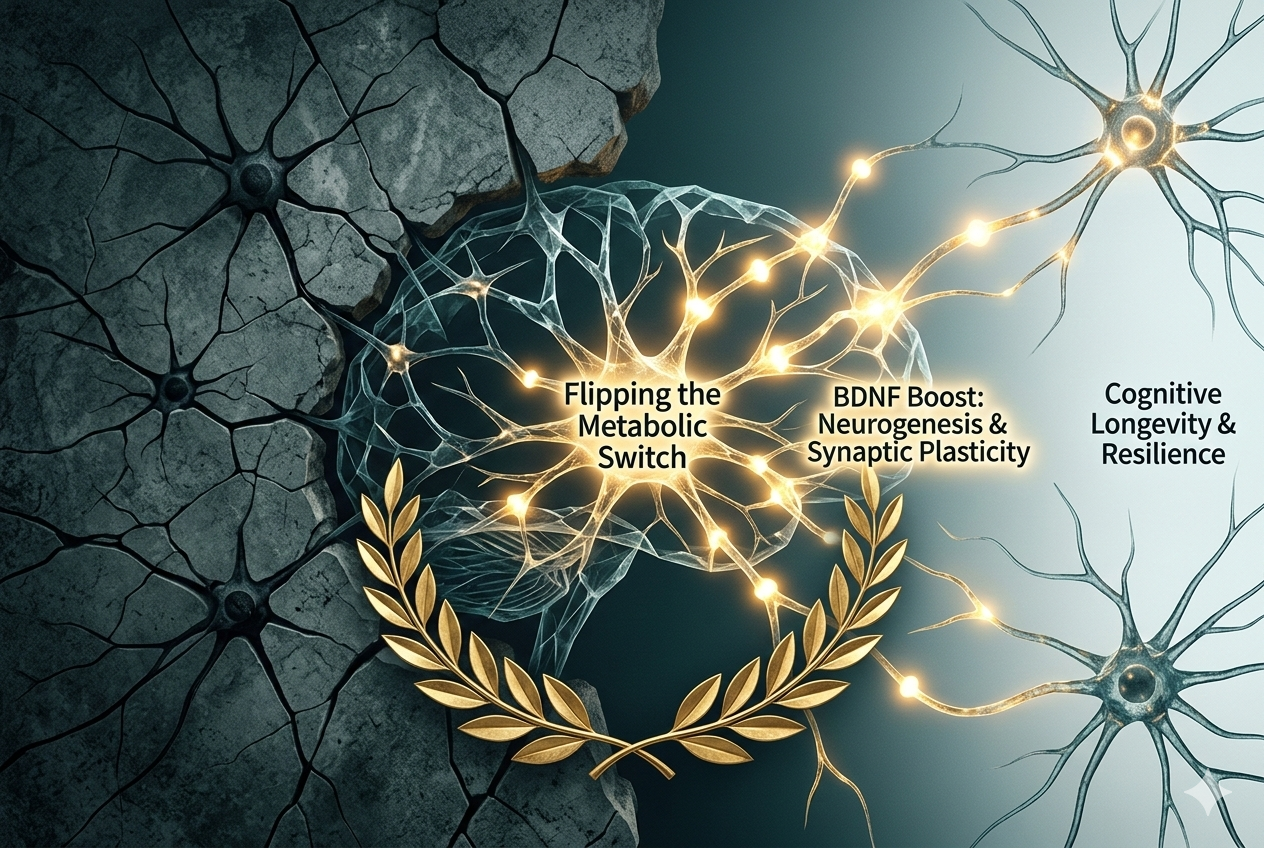
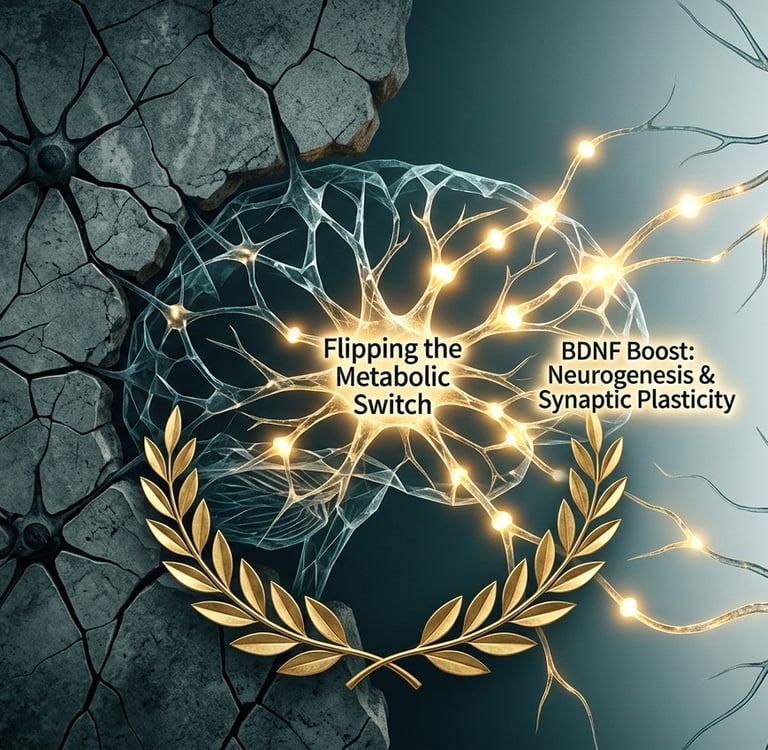
Intermittent fasting isn’t just for "macros" and waistlines—it’s an evolutionary workout for your mind. When you flip the "metabolic switch" from burning sugar to burning fat (ketones), your brain starts pumping out BDNF—essentially "Miracle-Gro" for your neurons. Discover how fasting triggers neuronal autophagy (the ultimate brain deep-clean) and forces your mitochondria to build brand-new, high-efficiency power plants, keeping your cognitive engine running sharp for decades.
Adrienne Muhammad
3/10/20263 min read
The Fasting Brain
The "Metabolic Switch" and Your Brain’s Miracle-Gro
At the center of all this is something called the metabolic switch. This is just a fancy way of saying your body stops burning sugar (glucose) and starts burning fat (ketones) for fuel. But ketones aren’t just "backup gas." They act like a signal that tells your brain to start pumping out Brain-Derived Neurotrophic Factor (BDNF).
Think of BDNF as "Miracle-Gro" for your neurons. It’s a protein that keeps your current brain cells alive and actually triggers neurogenesis—which is the literal growth of new neurons and the connections between them. Higher BDNF levels mean you learn faster, remember more, and build a "buffer" against diseases like Alzheimer’s.
Cleaning Up the Power Plants
Cognitive decline usually starts when your mitochondria—the "power plants" inside your cells—start getting lazy and creating too much biological "trash." Intermittent fasting forces your brain cells to adapt to having less energy available, which actually makes them more efficient.
This process, called mitochondrial biogenesis, is basically your brain building brand-new, high-efficiency power plants. This "metabolic conditioning" makes your brain cells way more resilient to the stress and "wear and tear" that usually leads to brain fog as we age.
The "Self-Cleaning" Mode: Autophagy
Chronic inflammation is like a slow-moving fire in the brain, linked to everything from depression to dementia. Fasting helps put that fire out, but it also triggers neuronal autophagy.
"Autophagy" literally translates to "self-eating," which sounds intense, but it’s actually a high-end cleaning service. During a fast, your brain cells identify and recycle broken proteins—like amyloid-beta and tau—which are the "junk" that clogs up the brain in Alzheimer’s patients. By clearing out this cellular trash, you’re keeping your brain’s structural integrity solid for the long haul.
The Bottom Line
From an evolutionary standpoint, our ancestors had to be at their absolute sharpest when food was scarce. Intermittent fasting taps into that ancient "survival mode," optimizing your brain’s performance when you aren't constantly digesting. By sticking to a fasting window, you’re essentially training your nervous system to be tougher, smarter, and more resistant to the clock.
FAQs: The Fasting Brain
Q: If I'm fasting for my brain, do I have to stop drinking coffee in the morning? A: Good news: your morning brew is actually a force multiplier. As long as you drink it black (no sugar, no cream), caffeine actually synergizes with fasting. Both triggers help flip that "metabolic switch" and boost the production of ketones. Caffeine also nudges your autophagy(the cellular cleanup) into higher gear. So, keep the coffee—just skip the latte art until your eating window opens.
Q: Does brain fog during a fast mean my "Miracle-Gro" (BDNF) isn't working? A: Not at all. If you feel a bit foggy during the first few days of a new fasting routine, that’s usually just your brain throwing a tantrum because it’s used to easy sugar. We call this "metabolic inflexibility." Once your brain adapts to burning ketones, that fog usually lifts and is replaced by a level of "clarity" you can’t get from a double espresso. That clarity is the sign that your BDNF is finally starting to kick in and rewire your synapses.
Q: Does fasting actually "eat" my brain cells if I don't eat enough protein? A: It’s actually the opposite! While the word autophagy literally means "self-eating," your brain isn't devouring healthy tissue. It’s more like a high-tech recycling program. Your cells identify broken, misfolded proteins (like amyloid-beta—the stuff linked to Alzheimer’s) and clear them out to make room for new, healthy components. As long as you’re eating enough during your "on" windows, fasting actually helps your brain stay structurally "younger" by getting rid of the cellular junk that causes brain fog.
Q: How long do I have to fast before the "Brain Miracle-Gro" (BDNF) kicks in? A: You don't have to go days without food to see a benefit, but you do need to hit the metabolic switch. For most people, the jump in BDNF and ketone production starts to ramp up after about 12 to 16 hours of fasting. This is when your liver runs out of stored sugar (glycogen) and starts sending those fat-burning signals to your brain.
Adrienne Muhammad, CFNC